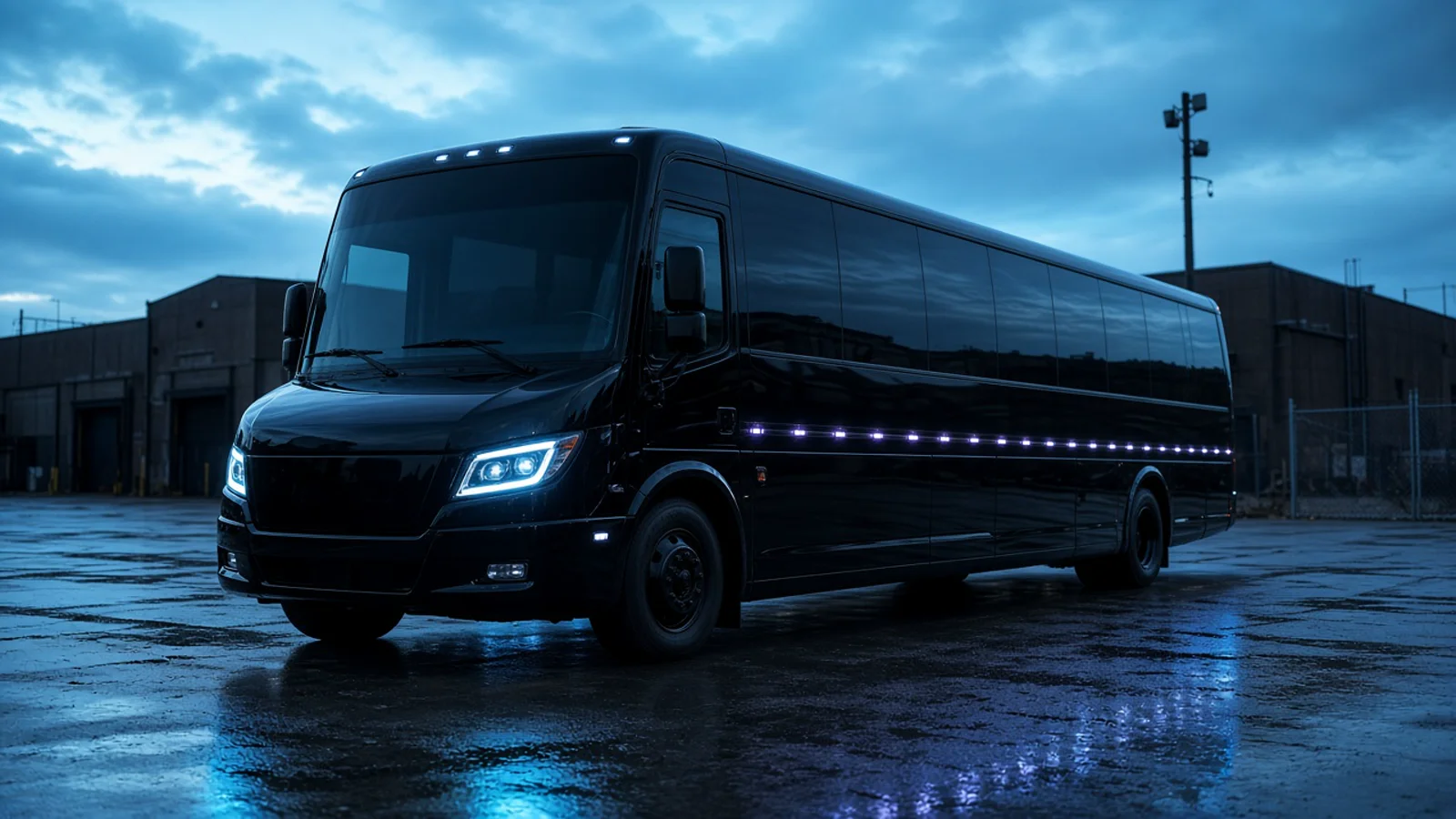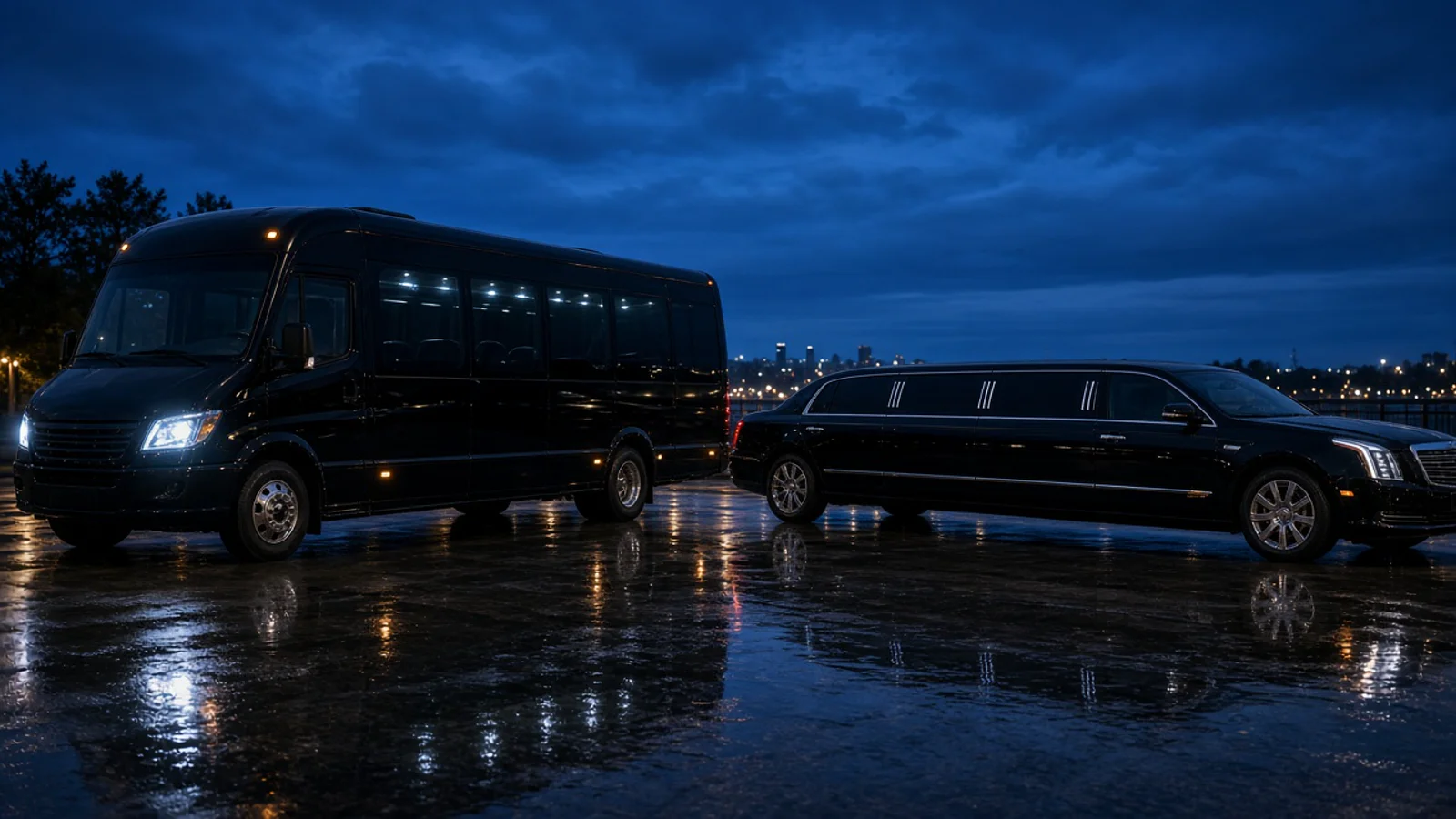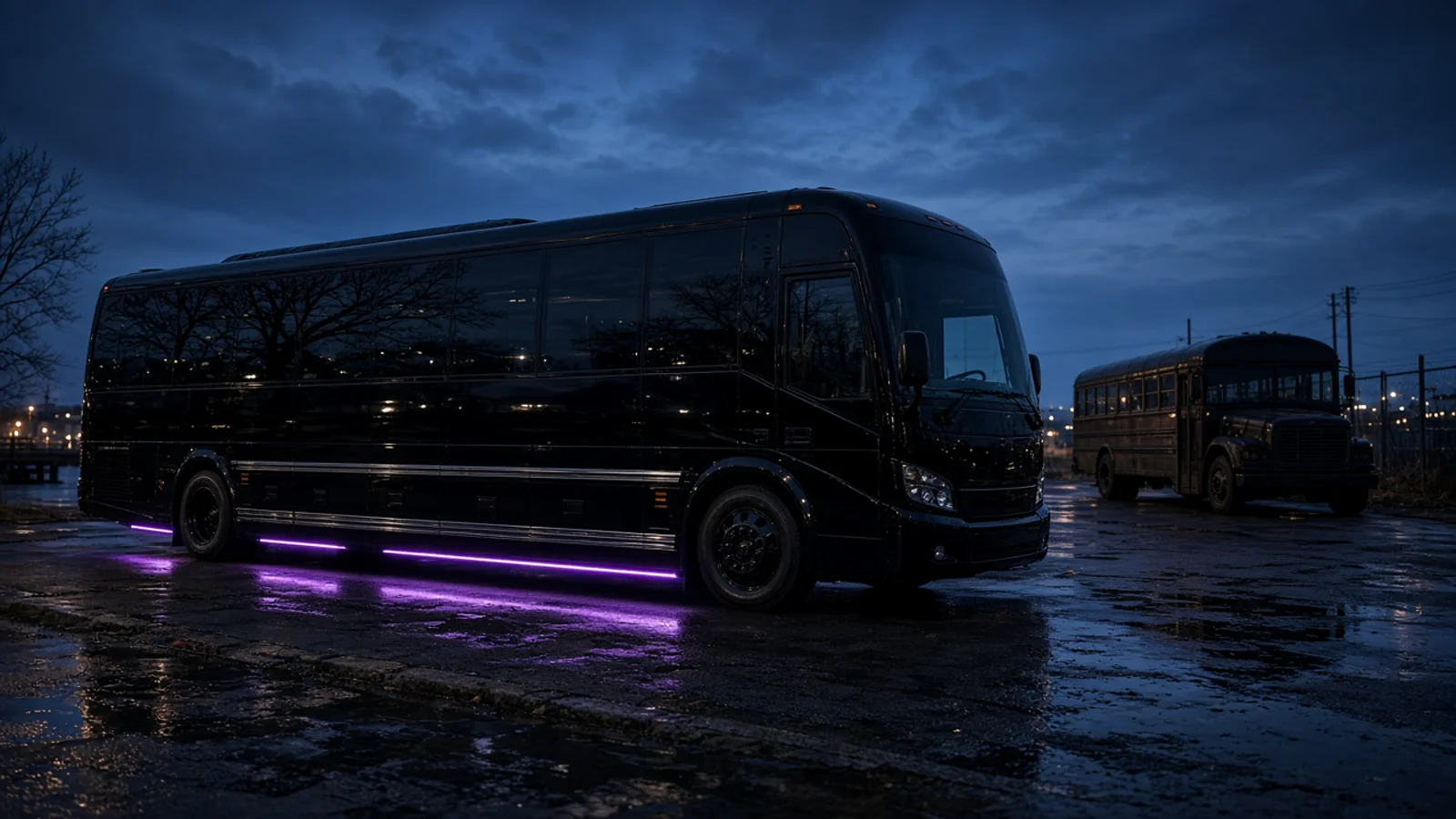
The party bus is now a distinct vehicle category with its own build standards, its own regulatory treatment and its own customer expectations. But the category that now includes concert-grade audio, laser arrays, and luxury seating for 40 started in the most utilitarian way: reused school buses with a coat of paint and a boom box. The arc from improvised party vehicle to $600,000 custom coaches tells a story about American entrepreneurship, changing nightlife regulation, and the economics of communal celebration.
The Forerunners: 1970s–1980s
Before the phrase “party bus” existed, two parallel traditions laid the groundwork. First, the custom van craze of the mid-1970s: owners installed shag carpet, captain’s chairs, and aftermarket sound systems in cargo vans. These personal vehicles proved a vehicle interior could become a social space. Second, charter bus after-parties: sports teams, concertgoers, and wedding parties riding motorcoaches between venues realized the ride was often more memorable than the destination.
The crucial insight—that a vehicle could be the venue—emerged organically but lacked a commercial delivery system.
Pro Tip: Ask About Date Flexibility
If your schedule can move, request pricing for more than one date or time window.
The First Wave: Chicago and New York, Early 1990s
Need a quote for your group?
A written total with gratuity shown. No obligation.
The first recognizable party bus operations appeared around 1991–1993 in Chicago and New York City. Entrepreneurs bought retired school buses at municipal auctions for $2,000–$5,000, stripped the bench seating, and installed home stereo equipment, black lights, and disco balls. Seating came from thrift stores, milk crates, repurposed van seats. Climate control meant opening windows.
These operations targeted bachelor parties and bar crawls. Pricing was $300–$500 for a night, cash only. The guy who owned the bus also drove it. No booking platforms, no insurance requirements specific to the category, no regulatory framework.
The Chicago model spread through word of mouth. A Wrigleyville bar owner kept the driver’s pager number. A Lincoln Park bachelor party hired the same bus three weekends running. The business was small, local, and invisible to the broader transportation industry.
Questions? We have answers.
Read Our FAQThe Corporate Era: 1998–2005
By the late 1990s, the economics were clear: a converted school bus costing $15,000 to build could generate $80,000–$120,000 in annual Friday-and-Saturday revenue. Fleet we emerged with 5–10 buses, hired dedicated drivers, and standardized builds.
Purpose-built party buses appeared. Builders like Midwest Automotive Designs, Krystal Enterprises, and Tuscany Motor offered factory-built luxury coaches on Freightliner, International, and Ford chassis. New mid-size buses ran $120,000–$200,000. The customer base expanded beyond bachelor parties to prom groups, wedding parties, and corporate events. The industry grew an estimated 300 percent between 2000 and 2010.
The Amenities Arms Race: 2010–2018
"The best group trips are the ones where nobody has to drive."
Competition shifted from availability to features:
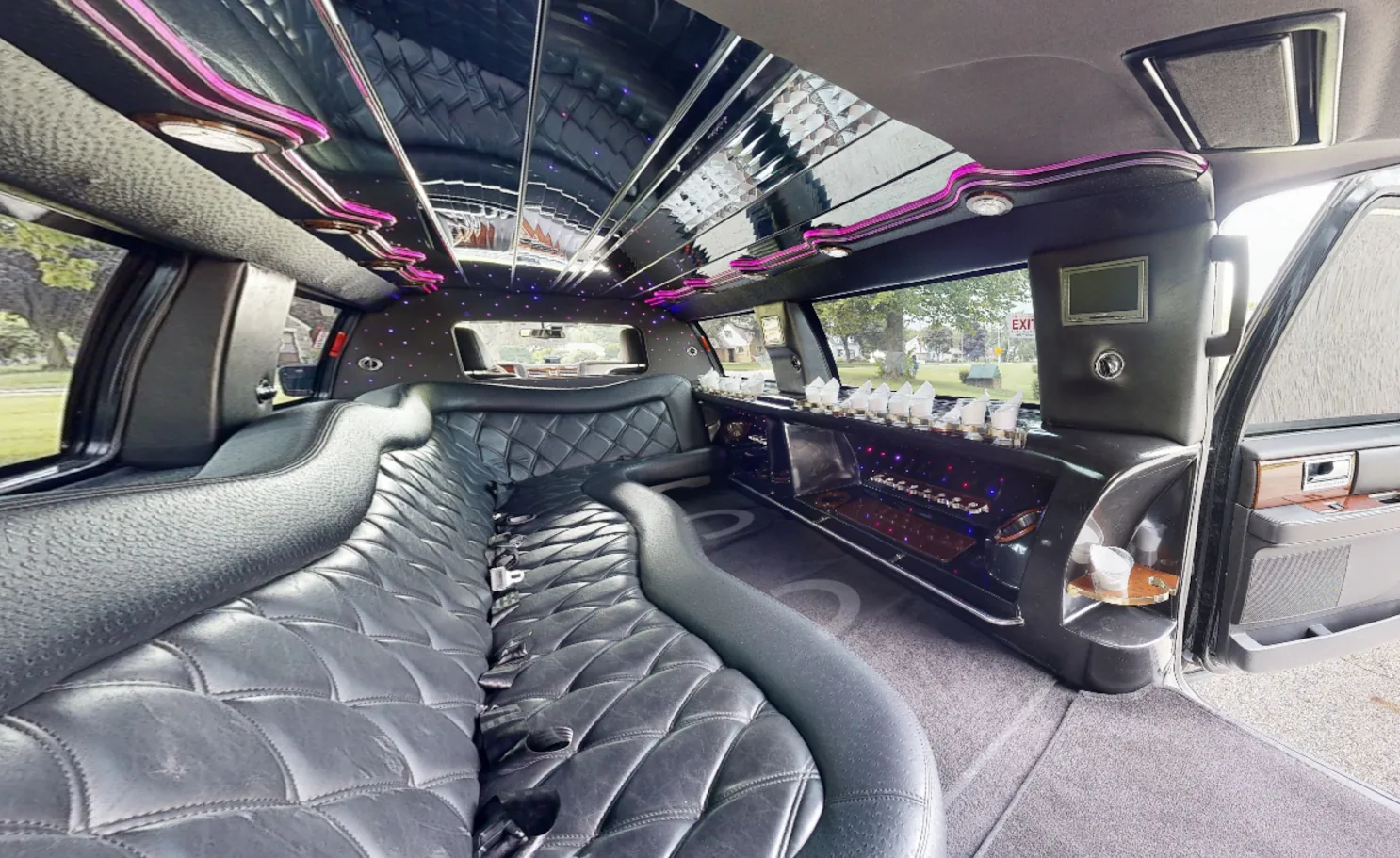
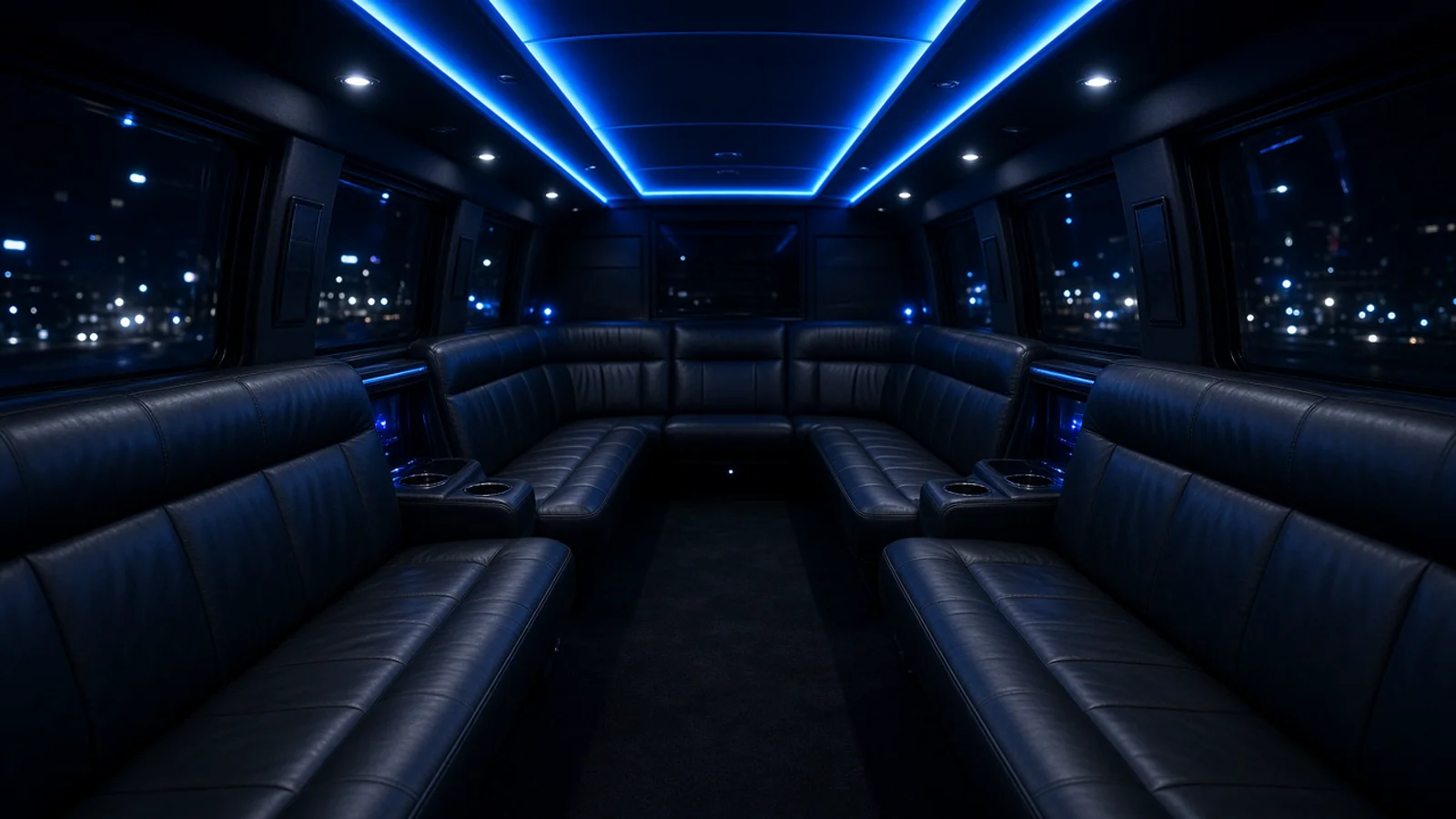
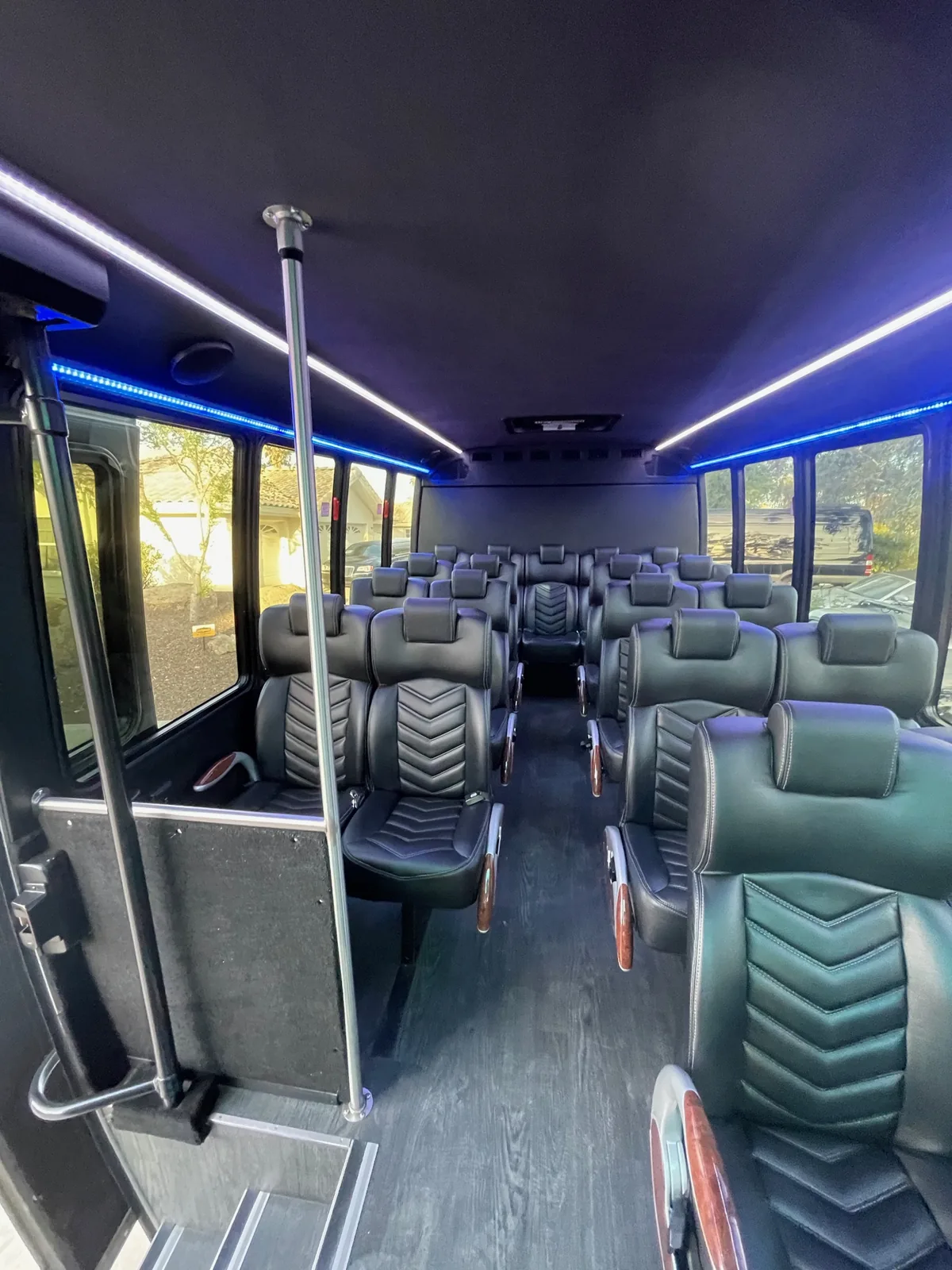
- **Audio:** From 1,000-watt car audio to 10,000+ watt concert systems with professional amplifiers, line arrays, and DSP tuning
- **Lighting:** From incandescent to full-spectrum RGB LED with DMX-controlled programmable shows and laser projectors
- **Video:** From single CRT televisions to multiple flat-screen displays with HDMI switching and satellite receivers
- **Materials:** From vinyl and plywood to automotive-grade leather, aluminum trim, and commercial-grade spill-resistant flooring
- **The pole** became a standard feature on most 20+ passenger models
By 2018, a fully equipped large party bus cost $350,000–$600,000 new.
Regulatory Tightening: 2014–Present
High-profile accidents prompted state-level legislation. California, New York, Illinois, and Florida passed enhanced safety standards including mandatory seat belts, stricter inspections, and CDL requirements. The FMCSA classified party bus operations under the same framework as charter companies. Insurance premiums rose to $15,000–$40,000 annually per vehicle, improving safety while driving marginal we out.
The Current Market: 2020–Present
The pandemic briefly halted the industry in 2020. Recovery brought consolidation: larger we acquired smaller ones, fleet sizes standardized, and pent-up demand returned. Today the U.S. market supports 5,000–7,000 companies, mostly small fleets of 2–10 vehicles per metro area. Consolidation continues, and the companies that came through it are the ones that owned their equipment rather than renting it by the night.
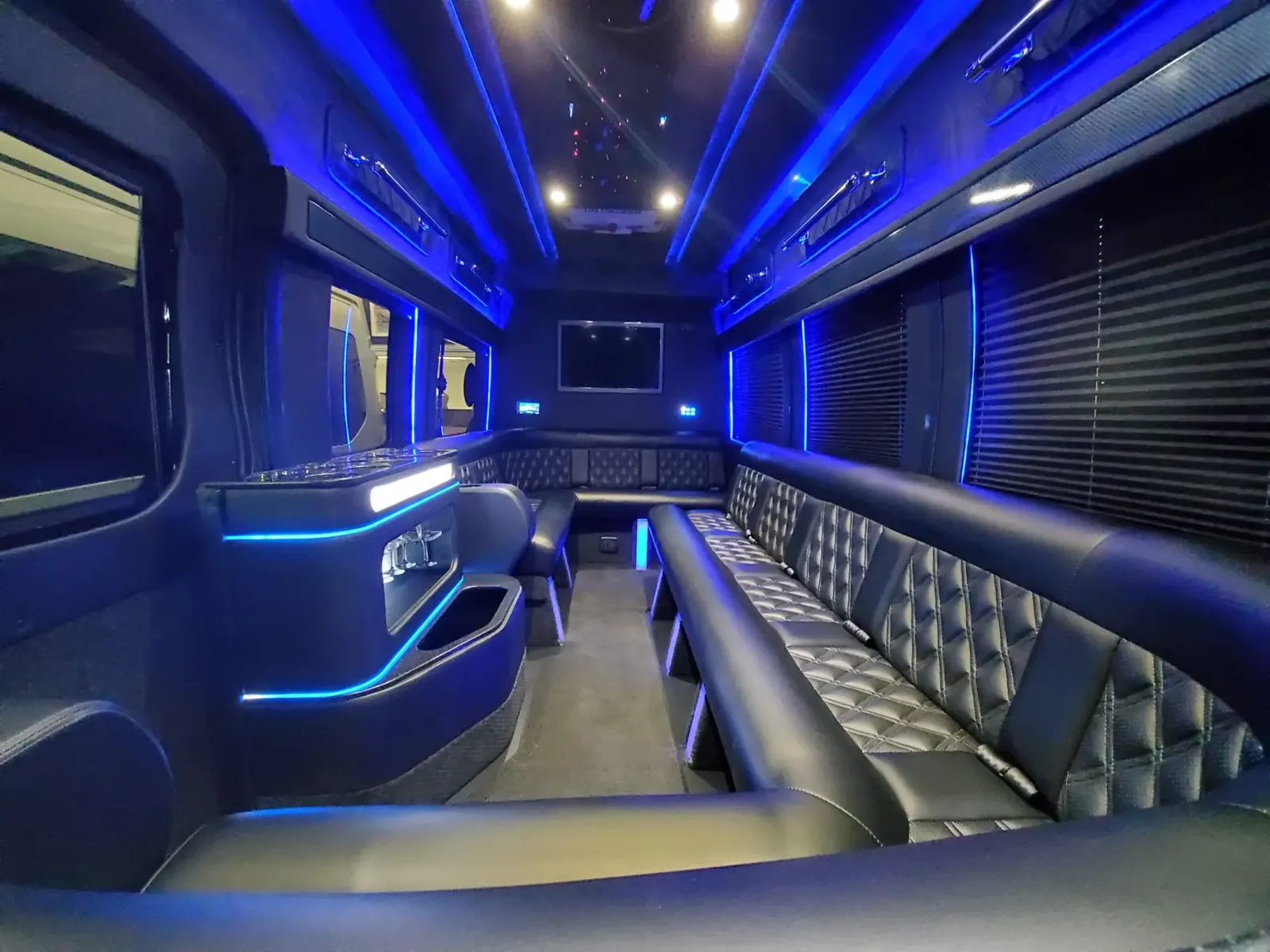
Electric party buses on Ford E-Transit and BrightDrop Zevo chassis appear in coastal markets. In-cabin technology now includes satellite internet for streaming, integrated karaoke, and app-controlled lighting.
The school bus with a disco ball is a museum piece. But the essential value proposition—a moving room where the party never stops between stops—has not changed in 30 years. Request a quote to see how far the industry has come.
Ready to Define the Trip?
Send us the route and the headcount and we will come back with the vehicle, the hours, and a total.
Submit a Trip Request